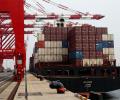
Container prices have shot up by up to 300 per cent in the past one month owing to geopolitical tensions between Israel and Iran following the former's attack on Hamas, causing shortages and pushing consumer durables companies to increase prices. Companies have planned increases but some are yet to decide on the extent of the increase.

Prime Minister Narendra Modi is set to hold bilateral meetings with US President Donald Trump and other prominent American personalities during his two-day visit to the United States.

Prime Minister Narendra Modi on Monday stressed the need to make India's banks and currency an important part of the international trade and supply chain. The prime minister also exhorted financial institutions to continuously encourage good financial and corporate governance practices. Inaugurating the iconic week celebrations by the Ministry of Finance and Corporate Affairs as part of the Azadi ka Amrit Mahotsav, Modi said India has developed various financial inclusion platforms and there is a need to create awareness about them for their optimum utilisation.

Despite several hurdles still to be crossed over for the ambitious expansion of nuclear power production in India, N-power is inevitable for the country's growth as well as to save future generation from inflation, a top executive of PricewaterhouseCoopers said on Thursday.

Passenger vehicle dispatches in India from factories to dealers rose to record levels at over 43 lakh units in FY25, with utility vehicles accounting for 65 per cent of the total sales in the segment, industry body SIAM said on Tuesday. Passenger vehicle (PV) dispatches rose to 43,01,848 units in the last fiscal year, marking a 2 per cent increase compared to 42,18,750 units in FY 2023-24.

India, Australia, Japan and the US on Friday pledged to work together for ensuring peace and prosperity of the Indo-Pacific and the world, as top leaders of the Quad grouping announced a slew of new initiatives to take on common challenges, amidst muscle flexing by an assertive China in the strategic region.
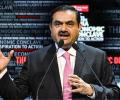
Billionaire Gautam Adani on Tuesday said China will feel increasingly isolated as rising nationalism, shift in supply chains and technology restrictions threaten the world's second-biggest economy. This is because globalisation, of which China was seen as the foremost champion, is at an inflection point. "It will look very different from what we had come to accept in a largely unipolar world," he said.

Flipkart Group on Monday said it has raised $3.6 billion (about Rs 26,805.6 crore) in funding led by GIC, Canada Pension Plan Investment Board (CPP Investments), SoftBank Vision Fund 2 and Walmart, valuing the e-commerce giant at $37.6 billion. The company, which competes with Amazon, Reliance Industries' JioMart and others in the burgeoning Indian e-commerce market, said it will continue to make deeper investments across people, technology, supply chain and infrastructure to address the requirements of a rapidly growing consumer base in the country. The current funding round has also seen participation from sovereign funds DisruptAD, Qatar Investment Authority, Khazanah Nasional Berhad as well as marquee investors Tencent, Willoughby Capital, Antara Capital, Franklin Templeton and Tiger Global.

Retail giant Walmart on Thursday said it is inviting select Indian sellers to join Walmart marketplace, a curated sellers community that serves more than 120 million US shoppers each month. India is already one of the top sourcing markets for Walmart and the retail major has set an ambitious goal of exporting $10 billion from India each year by 2027. "This initiative expands on over 20 years of Walmart's engagement with Indian exporters," said a statement from Walmart. Walmart is seeking new sellers from India as part of a global drive to attract international sellers and expand the marketplace's product assortment.
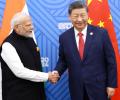
Chinese President Xi Jinping on Wednesday pledged to strengthen the strategic relationships with neighbouring countries by 'appropriately' managing differences and enhancing supply chain ties as China's tariff war with the United States escalated.

NTPC, Maruti, SBI, PowerGrid, Bajaj Auto, UltraTech Cement and Axis Bank rose up to 2.95 per cent.

India will drive growth in the Asia-Pacific (Apac) region as the growth engine is likely to shift from China to South and Southeast Asia in the coming years, S&P Global Ratings said in a report on Tuesday. The rating agency's report projected China's growth to slow down to 4.6 per cent by 2026 from an estimated 5.4 per cent in 2023. India is likely to clock 7 per cent economic growth from 6.4 per cent estimated for 2023.

N Chandrasekaran, chairman of Tata Consultancy Services (TCS) and Tata Sons, believes that the Digital India Act is a necessity. "The Digital India Act is a necessity because so much has changed over the decades since the original Information Technology (IT) Act was put in place. I am glad the government is developing a participative approach to developing the Digital Act," he said, while answering shareholders at TCS' 27th annual general meeting. Minister of State for Electronics and IT Rajeev Chandrasekhar a few months ago had said that the government would shortly roll out the Digital India Act - a renewed policy for the digital ecosystem and cyberspace in the country.

Meet Simmarpal Singh, a top level employee of Olam International, also known as the Peanut Prince of Argentina.

External Affairs Minister S Jaishankar has asserted that India has zero tolerance for terrorism and will never give in to nuclear blackmail, emphasizing that New Delhi will deal with Pakistan purely bilaterally. He made these remarks during a joint press conference with his German counterpart in Berlin, where he also highlighted the importance of the strategic partnership between India and Germany, emphasizing the need for a free trade agreement between the two nations.
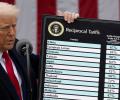
The impact of United States President Donald Trump's reciprocal tariffs is not yet known and New Delhi's strategy to deal with the situation is to firm up a bilateral trade pact with Washington, DC by fall of this year, External Affairs Minister S Jaishankar said on Wednesday.

'It took us 75 years to reach a per capita income of $2,730.' 'According to IMF projections, it will take only five years to add another $2,000.'
In a statement, the Chinese ministry of commerce said that it would file a lawsuit with the World Trade Organisation against the US for its "wrongful practice," the Global Times reported.

Global rating agency Moody's on Monday said the high commodity prices and supply chain disruptions due to further escalation in the Russia-Ukraine crisis could expose about 42 per cent of rated Indian companies to significant risks. They are mainly in the oil and gas and automotive sectors. The impact may be seen under two scenarios: first, revised base line and second being downside economic scenarios incorporating a global recession and a more severe liquidity squeeze, it said. The military conflict between Russia and Ukraine is impacting companies in Asia Pacific, adding to existing challenges from supply chain disruption and the coronavirus pandemic.

The government is likely to extend fiscal incentives for production of toys, bicycles and leather and footwear in the forthcoming budget as it looks to expand production linked incentive (PLI) scheme to cover more high-employment potential sectors, sources said. The government has already rolled out the scheme with an outlay of about Rs 2 lakh crore for as many as 14 sectors, including automobiles and auto components, white goods, pharma, textiles, food products, high efficiency solar PV modules, advance chemistry cell and speciality steel. The scheme aims to make domestic manufacturing globally competitive and create global champions in manufacturing, and it is yielding solid results, sources said.

Shares of Tata Consultancy Services (TCS), the country's largest IT services provider, continue to remain under pressure, hitting a new eight-month low of Rs 3,624.90 intraday on Tuesday before closing at Rs 3,631, down 1.19 per cent. In the past two trading sessions, the stock price has declined 4 per cent on fears of a slowing US economy.
To those who ask, "Is all this really worth it? Why can't domestic demand fill the gap?", it is important to remind them that only 13 economies since the Second World War have grown at 7 per cent or more for 25 years -- like India needs to. They all had one thing in common: Strong export growth underpinned by strong global engagement, explains Sajjid Z Chinoy.

India and Vietnam are vying with each other to woo semiconductor companies to their country. With the tension between the US and China escalating, and Taiwan getting vulnerable both countries are trying to present themselves as alternative destinations for global players. Vietnam, which started the effort as early as 2010, has got a leg-up after US President Joe Biden's visit last month.

With all the brouhaha over GST, and (often) a limited understanding of the long-term forces shaping India's logistics sector, companies seem to have omitted factoring in some underlying trends that could shape supply chain excellence, says Neelesh Mundra.

The Union Cabinet on Wednesday approved a Rs 76,000 crore policy boost for semiconductor and display manufacturing ecosystem in the country in an bid to position India as a global hub for hi-tech production. Announcing the decision of the Cabinet, IT and Telecom Minister Ashwini Vaishnaw observed that electronics plays an important role in everyday life, and semiconductor chips forms a crucial part of electronics. Outlining the details of the scheme, he said the Rs 76,000 crore programme has been approved for the development of semiconductors and display manufacturing ecosystem.

Supply chain constraints will keep plaguing automobile companies even though demand significantly improved resulting in a 13 per cent year-on-year (YoY) increase in sales in financial year 2021-22 (FY22). Executives at auto firms fear that the Russia-Ukraine war will further dent the sector's prospects of recovery as supply chains face more disruptions. "The visibility in the supply side is so hazy that it is difficult to give even one quarter projection. But all the parameters of demand like pending bookings and enquiries are increasing.

Manufacturing activities in India accelerated further and touched a four-month high in April, boosted by robust new business growth, mild price pressures, better international sales, and improving supply-chain conditions, a monthly survey said on Monday. The seasonally adjusted S&P Global India Manufacturing Purchasing Managers' Index (PMI) increased from 56.4 in March to 57.2 in April, indicating the fastest improvement in the health of the sector so far this year. The March PMI data pointed to an improvement in overall operating conditions for the 22nd straight month.

'Entering India is exciting, but it's also challenging. You have to be prepared for long-term investment.'

'The selling in India may emerge as soon as the RBI reverses its interest rate stance.'

India's policy for agriculture trade must move commodity-by-commodity to gain maximum benefits as US President Donald Trump's 26 per cent tariff on exports from the country take effect, said agriculture economist Ashok Gulati in a recent policy paper.

Tata Group is set to become India's first homegrown iPhone maker after Taiwan's Wistron Group agreed to sell a plant in Bengaluru to India's largest conglomerate. Wistron's board approved the sale of Wistron InfoComm Manufacturing (India) Private Ltd to Tata Electronics for $125 million, the Taiwanese electronics manufacturer said in a statement on Friday. The unit operates an iPhone assembly plant near Bengaluru.

'In the Indian government there are no illusions about the United States reliability or the possibility of having any kind of preferential treatment from Washington when it comes to trade.'

From highways connecting once-remote regions to aviation networks carrying millions, India's infrastructure story is one of transformation.

The impact of Trump's announcement of increasing import tariffs will have negligible benefit for India not because of companies trying to shift from China to other countries or their supply chains being affected due to their Chinese operations but because of our faulty policies, explains Mudit Jain.

Domestic rating agency Icra on Monday revised its FY24 GDP growth forecast to 6.5 per cent from 6.2 per cent earlier. However, the revised forecast is still much lower than the Reserve Bank of India's (RBI's) 7 per cent real Gross Domestic Product (GDP) growth estimate for the ongoing fiscal. Earlier this month, the RBI had revised upwards its GDP estimate to 7 per cent from 6.5 per cent, calling the revised number a "conservative" one.

Over the past three trading sessions, the stock of Cummins India has gained about nine per cent on strong January-March quarter (Q4) results and good near-term prospects. Its Q4 performance was led by a healthy 29 per cent revenue growth over the year ago quarter. This was largely on the back of a 33 per cent jump in domestic revenues while exports witnessed a growth of 17 per cent.

SoftBank Group-backed Ola Electric is in talks with multiple global suppliers to build a battery cell manufacturing plant in India with a capacity of up to 50-gigawatt hours, sources said. As part of its broader electrification push, the firm plans to invest in companies with advanced cell and battery technology, alongside the 50 Gwh battery plant. Ola Electric needs 40 Gwh of battery capacity to power 10 million electric scooters annually. The remainder will be for its electric cars, which the company plans to manufacture in the future.

If India caves in to US pressure as Trump hopes it will, he will further try to blackmail it into submission, points out Ramesh Menon.
'While criticising India's high tariffs, Mr Trump stated he would impose reciprocal taxes on Indian products if re-elected.' 'However, since India's tariffs follow WTO rules, Mr Trump's actions would violate these rules,' Ajay Srivastava points out.

Asia's richest man, Mukesh Ambani, signed off an address to employees last week by assuring them that 2024 would be better than 2023 for both Reliance Industries and India. Ambani isn't an exception. Promoters and their representatives from several other conglomerates have expressed similar optimism.
